
Most oil and gas operators in Alberta already have the raw material for a carbon offset project: pneumatic devices that vent, tanks and compressors that release gas, engines that run harder than they need to. What they often lack is the time and the specialist knowledge to turn those reductions into credits that a buyer will trust. That is where the choice of partner matters. A poor fit can leave a sound project stuck at verification. A good one keeps the work moving from the first site visit to the registry listing.
Start with what the Alberta system expects
Offsets in this province are created under the Alberta Emission Offset System. A project has to follow an approved quantification protocol, keep records that support every tonne claimed, pass an independent third-party verification, and then be listed and serialized on the provincial registry. Only then does a credit exist that a large emitter can use for compliance.
Any partner you consider should be able to explain each of those steps in plain terms, and show you where your project could stall.
Look for field experience, not just paperwork
The weakest point in most offset projects is the baseline. If the starting emissions are estimated loosely, every credit that follows is open to challenge. A partner with field crews can inventory devices, measure what is actually venting, and document equipment the way a verifier expects to see it. That is very different from a consultant who works only from spreadsheets supplied by the operator.
Ask how the partner collects data, who signs off on it, and how it is stored. Ask what happens when a device is replaced mid-project or a site changes hands. These are routine events in the field, and they are exactly where documentation tends to break down.
Match the partner to the project type
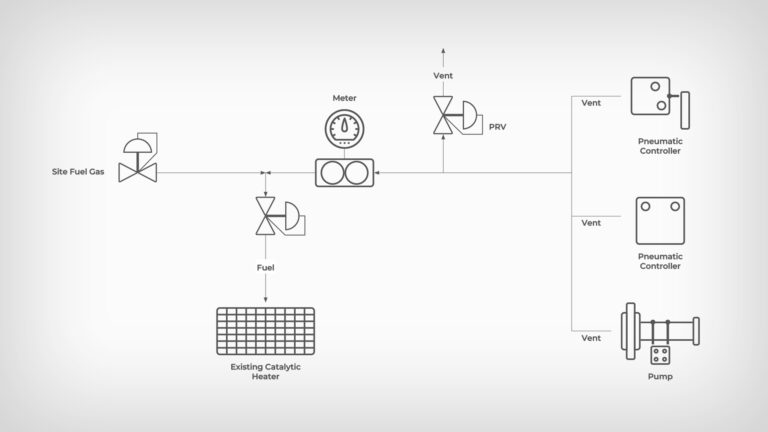
The most common offset projects in upstream oil and gas are pneumatic device conversions and vent gas reduction projects, where gas that would have been released is captured or eliminated. Both have established protocols and measurable results, but they call for different engineering and monitoring. A partner who has delivered both can tell you early which one suits your sites, and whether they can be combined.
It also helps to understand how offset credit generation works before you sign anything: how long a crediting period runs, how often reductions are verified, and when credits actually become available to sell or use.
What full carbon offset services should cover
Some firms handle a single piece of the process. Others take a project from idea to income. When you compare carbon offset services, check whether the scope includes:
- An eligibility screen against the applicable protocol before any money is spent
- Baseline measurement and a device or equipment inventory
- A project plan and monitoring plan written for verification
- Ongoing data collection and quantification
- Coordination with the third-party verifier
- Listing and serialization on the Alberta Emissions Offset Registry, and the paperwork that goes with it
- Advice on whether to use credits internally, bank them or sell them
A gap anywhere in that chain becomes your problem to solve, usually late and under time pressure.
Questions worth asking before you commit
Before choosing a partner, ask for a clear answer to each of these:
- How many projects of this type have you taken through verification, and were any delayed?
- Who owns the field data, and can we see it at any time?
- How are your fees structured: fixed, per tonne, or a share of credit value?
- What happens to the project if emissions rules or protocols change?
- How will you report progress to our operations and finance teams?
The answers tell you as much about how the partner works as about what they know.
Where emissions reporting fits in
An offset project does not sit on its own. The large emitters who buy offsets do so to meet the Technology Innovation and Emissions Reduction (TIER) Regulation, and the sites that generate them are usually subject to methane and venting requirements, and the data gathered for one often supports the other. Operators who line up their offset work with their wider emissions consulting and reporting avoid measuring the same equipment twice and keep one consistent record of what each site emits.
The bottom line
Credits are only as strong as the data and documentation behind them. Choose a partner who understands the Alberta process end to end, who can back the numbers with field work, and who will tell you plainly when a project is not worth pursuing. That combination protects both the value of the credits and the time of the people running your operation.